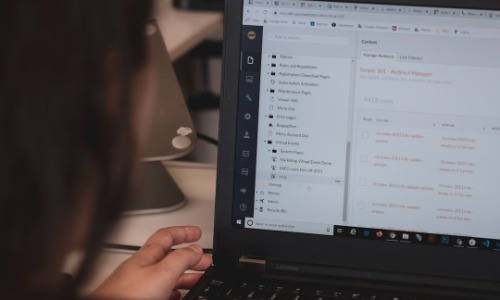
Do you like to experiment with technologies, have a home server, or simply value your privacy and would like to have full control over your data? If so, you’ve likely considered moving away from so-called ‘mass market’ cloud services such as Google Drive. Although it has its advantages, the notion of uploading all of one’s files to a third-party service does not make some people comfortable, especially when you are managing a home lab. That is why there are self-hosted alternatives to Google Drive for home labs as a solution.
So, what are these options? Why are more people switching? How difficult is it to set up your own cloud? We will consider all of this in detail, each step at a time.
Why Not Just Stick With Google Drive?
Google Drive can be described as fast, effortless, and globally recognized. But it has limits. First of all, someone is entrusting his personal documents to a certain company. You are also limited to storage space unless willing to spend more money with it and the features on the tool can sometimes be a little fixed if one would want something different from what is provided.
Freeform and discretion are two attributes that home laboratory enthusiasts do not take lightly. That is why it is reasonable to consider the existing self-hosted counterparts of Google Drive for home labs. These let you deploy your own exclusive cloud, control it as you prefer, and are free of monthly charges.
What You Need Before Getting Started
It is, therefore, helpful to understand what one will need when embarking on the assessment tool selection process:
- A computer or a server that can stay on all the time (and certainly, even a Raspberry Pi will do the job)
- Some hard drive space for your files
- What is more, a simple comprehension of how to install the software is provided.
- Both time and curiosity (it is, of course, an amateur project)
With that being said, let us now take a look at the pick of the bunch.
1. Nextcloud: The Most Popular Pick
The next option that has greater recognition in contrast with Google Drive used in the home labs is called Nextcloud. It can be viewed as a cloud storage similar to well-known services like Dropbox or Google Workspace. For convenience, files can also be synchronized across devices, URLs can be shared with friends, and simultaneous document editing using a browser is also possible.
It has a too big community that can assist if you meet such problems, and it’s open-source, which means it does not cost anything. The best part? You can install/use as many apps as you wish, including calendar, mail, and video conferencing, among others.
It can take some time to configure, but using it is a trouble-free process which does not throw any critical problems at all.
2. ownCloud: Similar but Slightly Different
Nextcloud is in fact the fork of ownCloud which is the project that was developed earlier. He claims that LinuX has a lot in common with ownCloud, but the last one is more oriented to the enterprise sphere. However, it is not bad at all at all in use for home purposes especially with the prepared subwoofer.
If you want a stable option, then this is another good option that is well-polished and flexible. It is one of the simple and effective home lab self-hosted solutions that quickly replace Google Drive.
3. Syncthing: Peer-to-Peer Magic
There are occasionally scenarios where one doesn’t need a full web dashboard or a server at the center of the picture. However, if this is not what you were looking for, there is another equally good option, in the form of Syncthing. This tool functions in cooperation with other devices through file synchronization. Well, it’s not different because the cloud is not involved; rather, your own computers are conversing with each other.
One is useful if need to synchronize a couple of home devices or if you want to make backups. There are other options to SyncThing, such as Syncthing, which relies upon other similar technologies, is quickly and well developed secure and free. It doesn’t come with a GUI like the other programs out there, but there is no denying the fact that it is light and quick for some basic configurations.
4. Seafile: Fast and Efficient
Looking for speed? Seafile is a great choice. Designed for the capability of performing synchronization of the large dataset in the short time, it is intelligent enough to consider only the modified portion of various files.
Seafile is clean and fast, but does not offer as many options as Nextcloud, although am quite suitable for storing and sharing files with very minimal features being added to it.
In my opinion, it is the best free and self-hosted Google Drive substitute that I have tested on a home lab scale.
5. Pydio Cells: For the Power Users
Whereas, Pydio Cells is a professional level interface that gives full control over permission, sharing and various types of works. This is most suitable if you have more than one login in the home network or if you are designing a system for your household or office.
The initial configuration is slightly more complicated than in other VPN services, but after that, the service provides good protection and flexibility.
If you have a fully functional home lab that is slowly expanding and you are eager to take your lab to a different level, this might very well do the job.
How Do You Choose the Right One?
So here is a question for reflection: How do you make a choice, given that you have so many opportunities to choose from? Start by asking yourself:
- Should I use a basic application that will suffice, or do I need a complex application with many features?
- Will I be transferring files to other people?
- Should people opt for speed or secrecy?
- Do I have enough time left in my day to invest my time and effort into learning and maintaining this system?
Wherever you stand, you are likely to find something suitable to use for home labs on the given self-hosted options for Google Drive.
Final Thoughts: Your Files, Your Rules
You may think managing your own file storage is complicated, but in fact, it is quite an interesting and enjoyable venture, especially if you already run home labs. These tools offer more flexibility and enable users to learn about servers, networks, digital security, and more.
All in all, opting for any of the above self-hosted options for home labs is a sign of freeing up one’s digital life. There will be no more guessing the identity of the people accessing our files or how our information is being utilized.
So, are you ready to build your own cloud?